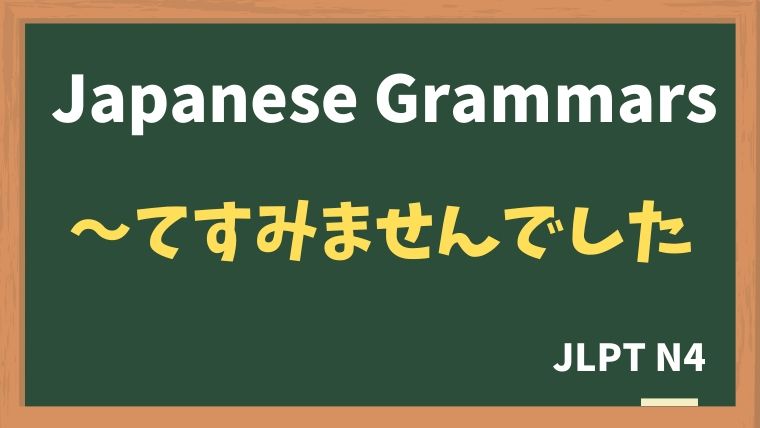
Explanation:〜てすみませんでした
fa-check-circleMeaning
"I'm sorry for"
Used to apologize for a past action or mistake. It’s a polite way to express regret or remorse for something the speaker did, acknowledging any inconvenience or trouble caused to someone else.
fa-check-circleForm
V(te form) + すみませんでした
V(nai form)ないくて + すみませんでした
fa-check-circlePoints
- Apology for Past Actions: "〜てすみませんでした" is used when the speaker wants to apologize for something specific that has already happened.
- Politeness and Formality: This phrase is polite and suitable for various formal and informal situations where a sincere apology is needed.
- Acknowledging Responsibility: It implies the speaker recognizes the action may have caused trouble, inconvenience, or discomfort.
fa-check-circleJLPT Level
N4
fa-check-circleNote
The casual way of saying "〜てすみませんでした" is "〜てごめん"
Sample sentenes
遅刻して すみませんでした。
I’m sorry for being late.
宿題を 忘れて すみませんでした。
I’m sorry that I forgot my homework.
借りた カメラを 壊してしまって 本当にごめん。
I’m really sorry that I broke the camera that I borrowed from you.
昨日の パーティーに 参加できなくて ごめん。
I’m sorry that I couldn’t attend the party yesterday.
Vocabulary
| Japanese | English |
| ちこくする | to be late |
| わすれる | to forget |
| かりる | to borrow |
| こわす | to break |
| さんかする | to join |