Contents
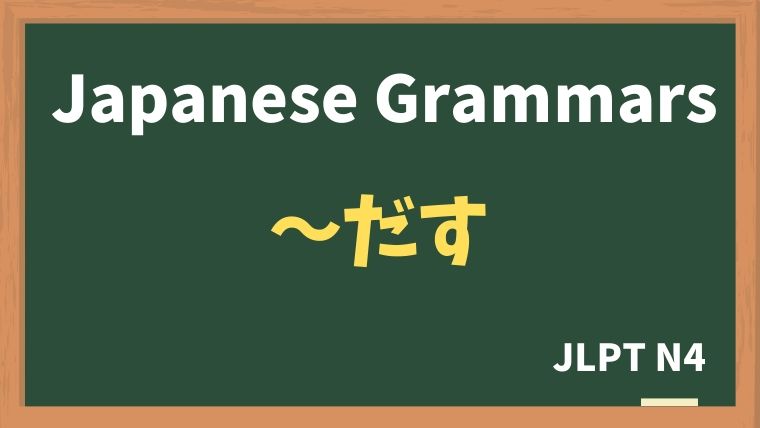
Explanation:〜だす
fa-check-circleMeaning
"suddenly start to"
Used to indicate the sudden start or emergence of an action. It often conveys that something happened unexpectedly or abruptly. It is similar to "suddenly start to" or "burst into" in English.
fa-check-circleForm
V(masu form)ます + だす
fa-check-circlePoints
- Sudden Start: "〜だす" suggests that an action or state begins suddenly or unexpectedly.
- Spontaneous or Uncontrollable: The action expressed by the verb often feels spontaneous or out of the speaker's control.
- Can Be Positive or Negative: Depending on the verb used, "〜だす" can describe both pleasant and unpleasant occurrences.
fa-check-circleJLPT Level
N4
fa-check-circleNote
This grammar pattern cannot be used to express speaker's volition.
Sample sentenes
彼は とつぜん、笑いだした。
He suddenly started laughing.
学校を 出たら 突然 雨が 降り出した。
When I went out, it suddenly began to rain.
その男の子は 私の 顔を 見ると 突然 泣き出した。
That boy suddenly began to cry when he saw my face.
ジェームスさんは 漫画を 読んでいて とつぜん 大きな 声で 笑い出した。
James was reading comics then he suddenly began to laugh loudly.
止まっていた 電車が 急に 動き出しました。
The train that stopped suddenly began to move.
その男は 警察官を 見ると 急に 走り出しました。
The man suddenly began to run when he saw the policeman.
Vocabulary
| Japanese | English |
| でる | to leave |
| とつぜん | suddenly |
| かお | face |
| なく | to cry |
| まんが | comic |
| こえ | voice |
| わらう | to laugh |
| とまる | to stop |
| きゅうに | suddenly |
| うごく | to move |
| けいさつかん | police officer |
Comparison: "〜はじめる" vs. "〜だす"
Both "〜だす" and "〜はじめる" mean "to start," but "〜はじめる" simply indicates the beginning of an action, while "〜だす" emphasizes that it happens suddenly or unexpectedly.
For example, "わらいはじめた" (started laughing) just notes the beginning of laughter, while "わらいだした" (burst into laughter) suggests that it happened suddenly or with a sense of surprise.
Similar Sentence Pattern