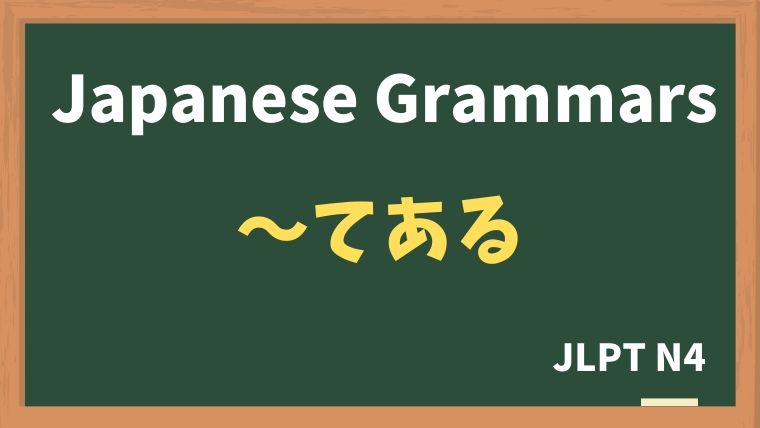
Explanation:〜てある
fa-check-circleMeaning
"somebody has done something intentionally and that state continues."
Used to indicate that an action has been intentionally done and its result is still in effect. It often suggests that a task has been completed with a purpose in mind, and this state remains relevant.
fa-check-circleForm
V(te form)+ ある
fa-check-circlePoints
- Indicates Prepared State: "〜てある" emphasizes that something has been intentionally prepared or set up for a specific purpose.
- Focus on Result: The focus is on the current state of the object, rather than the action itself.
- Nuance of Readiness: Often conveys that something is ready, arranged, or intentionally left in a certain state.
fa-check-circleJLPT Level
N4
Sample sentenes
もう レストランの 予約が してあります。
The restaurant reservation has already been made.
かべに ポスターが 貼ってあります。
A poster is hanging on the wall.
机の 上に スピーカーが 置いてあります。
There is a speaker on the desk.
電気が つけてあります。
The lights are on.
本に 名前が 書いてあります。
A name is written in the book.
来週の 旅行の 準備は もう してあります。
The preparations for next week's trip have already been done.
テーブルの 上に スプーンと フォークが 並べてあります。
Spoons and forks are arranged on the table.
Vocabulary
| Japanese | English |
| よやく | reservation |
| はる | to post |
| でんき | light |
| りょこう | travel |
| じゅんび | preparation |
| ならべる | to line up |
Comparison:"〜てある" vs. "〜ている":
While "〜ている" describes a continuous action or state, "〜てある" emphasizes that someone has completed an action with an intended result.
宿題を している。 (I am doing homework.) — continuous action
宿題は してある。 (The homework is done.) — completed action with the state remaining