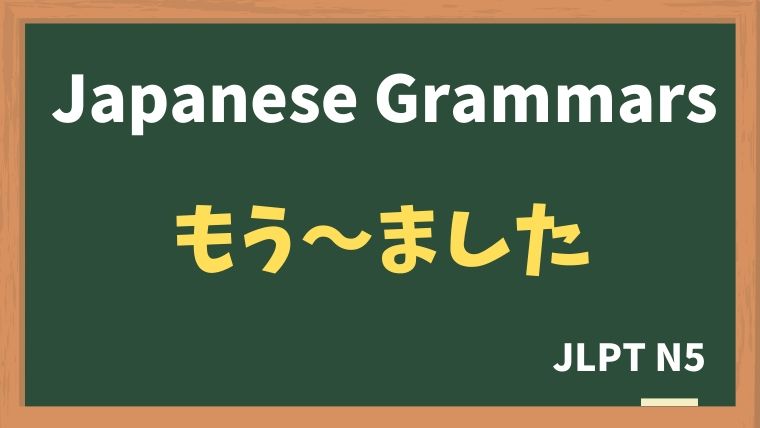
Explanation:もう〜ました
fa-check-circleMeaning
"have already done"
Used to express that an action has already been completed. It corresponds to "have already done" in English. This form is useful when talking about actions that are finished, often implying that the action was completed earlier than expected or as a confirmation of completion.
もう means “already”, When you use “もう”, Verb is always in the past form. In answering the question “もうVましたか” , if the answer is “yes”, “はい、もうVました” is used. But if the answer is “No”, “いいえ、まだです” or "いいえ、まだVていません"is used. Be careful, you can’t say “いいえ, Vませんでした”.
fa-check-circleForm
もう + V(past form).
fa-check-circlePoints
- Completion of Action: "もう〜ました" indicates that something has already happened or been done.
- Common in Conversation: This structure is frequently used in casual and formal conversations to check or confirm if something is finished.
- Can Show Surprise or Emphasis: Depending on the context, it can also express surprise at the early completion of an action.
fa-check-circleJLPT Level
N5
Sample sentenes
A:もう 夏休みの 宿題が 終わりましたか。
B:いいえ、まだです。
A:Have you already finished your homework for the summer vacation?
B:No, not yet.
A:もう 昼ごはんを 食べましたか。
B:いいえ、まだです。
A:じゃあ、一緒に 食べませんか。
A:Have you already eaten lunch?
B:No, not yet.
A:So, would you like to eat with me?
A:もう レポートを 出しましたか。
B:はい、さっき 出しました。
A:いいですね。 私は まだ 出していません。
A:Have you submitted your report already?
B:Yes, I was writing it down a while ago.
A:Good. I haven’t submitted yet.
Vocabulary
| Japanese | English |
| なつやすみ | summer vacation |
| しゅくだい | holiday |
| ひるごはん | lunch |
| いっしょに | together |
| レポート | report |
| だす | to submit |