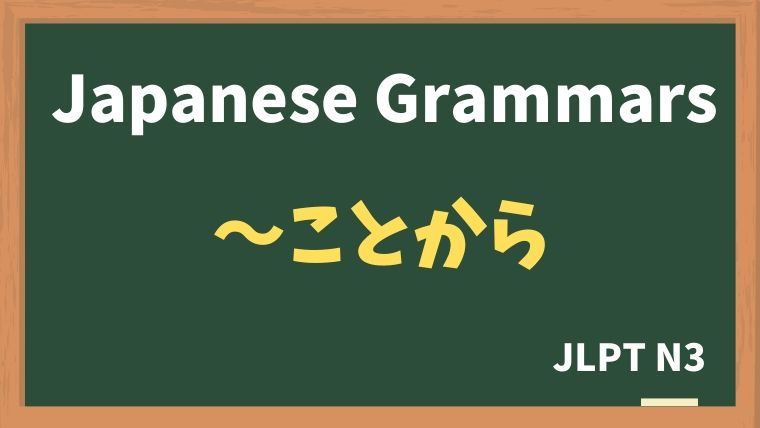
Explanation:〜ことから
fa-check-circleMeaning
"〜ことが理由で / 〜ことが原因で"
"from the fact that"
Used to indicate a reason, cause, or basis for a particular conclusion or judgment. It often connects a fact or observation with a resulting action, decision, or understanding.
fa-check-circleForm
V(plain form)+ ことから
イA(plain form)+ ことから
ナAな / である / だった + ことから
Nである / だった + ことから
fa-check-circlePoints
- Indicates Reason or Cause: "〜ことから" is used to express that something happened, or a conclusion was drawn, based on a specific reason or cause.
- Often Used in Explanations: This expression is frequently used when explaining why something is the way it is, often leading to a logical conclusion or decision.
- Links Observation to Outcome: It creates a link between an observation or fact and the outcome that follows from it.
fa-check-circleJLPT Level
N3
Sample sentenes
二人の顔が似ていることや、同じ服を着ていることから、すぐに双子だとわかった。
I immediately knew they were twins because they looked alike and wore the same clothes.
この曲は、映画で使われたことから有名になった。
This song became famous because it was used in a movie.
彼は漢字をたくさん知っていることから、「漢字の辞書」と呼ばれている。
He knows a lot of kanji, so he is called "the Kanji Dictionary.
道が濡れていることから、雨が降ったということがわかる。
I can tell it rained because the road is wet.
先生はひげが濃く、大きいことから「クマ先生」と呼ばれている。
The teacher is called "Bear Sensei" because he has a thick beard and is big.
この地域は夏でも涼しいことから、多くの観光客が訪れる。
Because this area is cool even in summer, many tourists visit.
Vocabulary
| Japanese |
English | |
| 双子 | ふたご | twins |
| 曲 | きょく | song |
| 濡れる | ぬれる | to get wet |
| 道 | みち | street / road |
| 髭 | ひげ | beard |