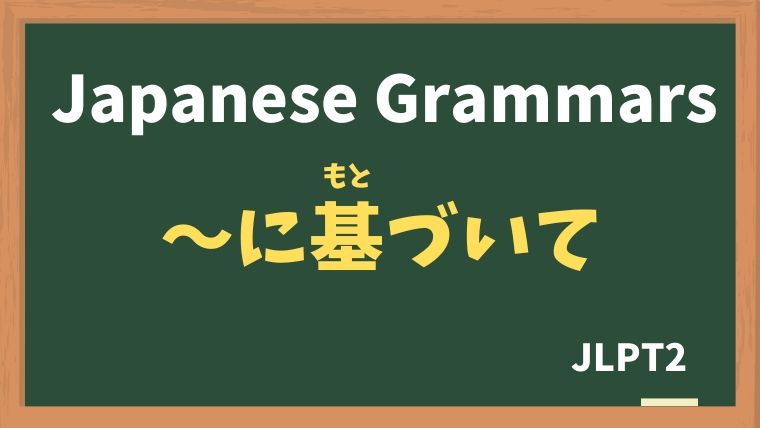
Explanation:〜基づいて
fa-check-circleMeaning
”〜を基準にして"
"based on"
The expression "〜に基づいて" in Japanese means "based on" or "according to." It is used to indicate that an action, decision, or judgment is made by relying on or referencing certain information, facts, rules, or data. This phrase is common in formal contexts, including business, legal, and academic writing.
fa-check-circleForm
N + に基づいて
fa-check-circlePoints
- Foundation or Basis: "〜に基づいて" emphasizes that the following action or statement is grounded on some established information or source.
- Formal Usage: It is often used in formal writing and speech, such as reports, regulations, and decisions.
- Nouns as Reference Points: The phrase connects with a noun that represents the basis of the action or decision.
fa-check-circleJLPT Level
N2
Sample sentenes
この映画は、事実に基づいて作られています。
This movie is based on true events.
アンケートの結果に基づいて、今後の方針を決めるつもりだ。
We intend to make future decisions based on the survey results.
安藤百福という日本人は、旅行で得たヒントに基づいて、カップラーメンを発明した。
Momofuku Ando, a Japanese inventor, developed instant ramen based on inspiration he gained during his travels.
音読みは中国語の発音に基づいて作られました。
On'yomi is based on the pronunciation of Chinese characters.
調査結果に基づいて、結論を出しました。
We reached a conclusion based on the research results.
Vocabulary
| Japanese |
English | |
| 事実 | じじつ | fact |
| - | アンケート | questionnaire |
| 方針 | ほうしん | course / plan |
| 発明する | はつめいする | to invent |
| 音読み | おんよみ | on reading |
| 発音 | はつおん | pronunciation |