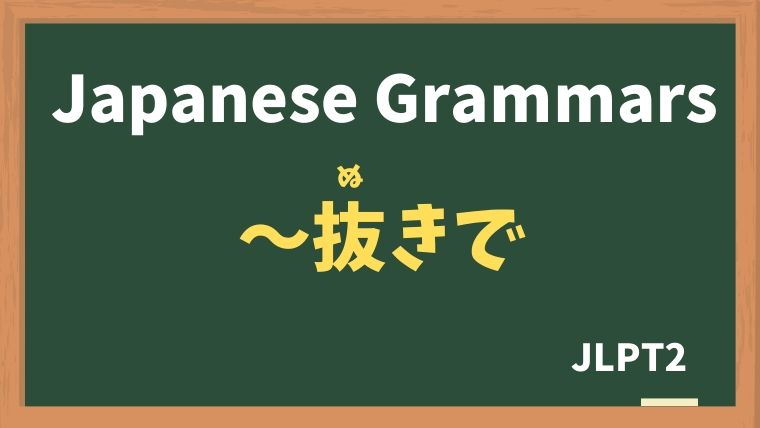
Explanation:〜抜きで / 抜きにして
fa-check-circleMeaning
"〜を入れないで / 〜を除いて / 〜しないで"
fa-check-circleForm
N(は/を) + 抜きで / 抜きにして
fa-check-circlePoints
- Omission: This expression indicates that a particular thing is left out or done without.
- Focus on Exclusion: It highlights that the excluded element is typically essential or significant, but is intentionally removed.
- Can Be Used in Both Literal and Figurative Senses: It may refer to leaving out a physical item or disregarding a certain emotion or issue.
fa-check-circleJLPT Level
N2
Sample sentenes
今日は仕事の話抜きで楽しもう!
Let’s have fun today without talking about work!
チーズバーガーを1つ、ピクルス抜きでお願いします。
One cheeseburger, please, without pickles.
サーモン、ワサビ抜きでお願いします。
Salmon, please, without wasabi.
今度の飲み会はトムさん抜きでやろうよ。
Let's have the next drinking party without Tom.
彼抜きでは、このプロジェクトは成功しなかった。
This project would not have been successful without him.
冗談抜きにして、真面目に話しましょう。
Let’s talk seriously without joking around.
お世辞抜きで、この絵は本当に素晴らしい。
No flattery, this painting is truly amazing.
Vocabulary
| Japanese |
English | |
| - | チーズバーガー | cheese burger |
| - | ピクルス | pickles |
| 朝食 | ちょうしょく | breakfast |
| 成功する | せいこうする | to succeed |