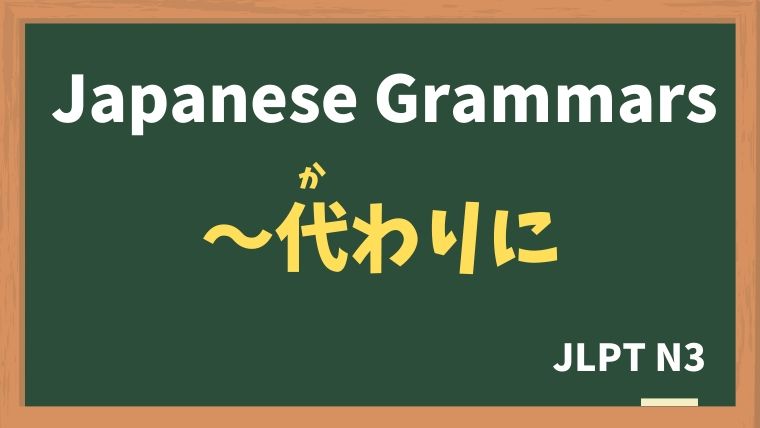
Explanation:〜代わりに
fa-check-circleMeaning
"instead of"
Used to indicate a replacement, substitution, or compensation. It is used when one thing is done in place of another or when an alternative is offered. It can also express that something is gained in exchange for something else.
fa-check-circleForm
V(masu form)ます + 代わりに
fa-check-circlePoints
- Replacement or Substitution: "〜代わりに" indicates that one action or thing takes the place of another. It is often used when something is done in place of another person, action, or object.
- Compensation or Trade-off: It can also express that something is received or done as compensation or in exchange for something else.
- Two-Part Structure: The sentence often has two parts: one indicating what is being replaced or substituted, and the other showing what is taking its place or being given in return.
fa-check-circleJLPT Level
N3
Sample sentenes
部長の代わりに私が会議に出ることになった。
I will be attending the meeting in place of the department manager.
母は熱があったので、今日は父が代わりに料理を作ってくれた。
Since my mother had a fever, my father cooked instead today.
外は雨なので、モールへ行く代わりに、家でNetflixを見ることにした。
Since it's raining outside, I decided to watch Netflix at home instead of going to the mall.
スクールに通うのは高いので、その代わりに本を買って一人で勉強している。
Since attending school is expensive, I buy books and study by myself instead.
私は夜早く寝る代わりに、朝早く起きて勉強している。
Instead of going to bed early at night, I wake up early in the morning to study.
日本語を教える代わりに、英語を教えてもらった。
In exchange for teaching Japanese, I was taught English.
車で行く代わりに、電車で行こう。
Instead of going by car, let's go by train.
Vocabulary
| Japanese |
English | |
| 会議 | かいぎ | meeting |
| 通う | かよう | to commute |