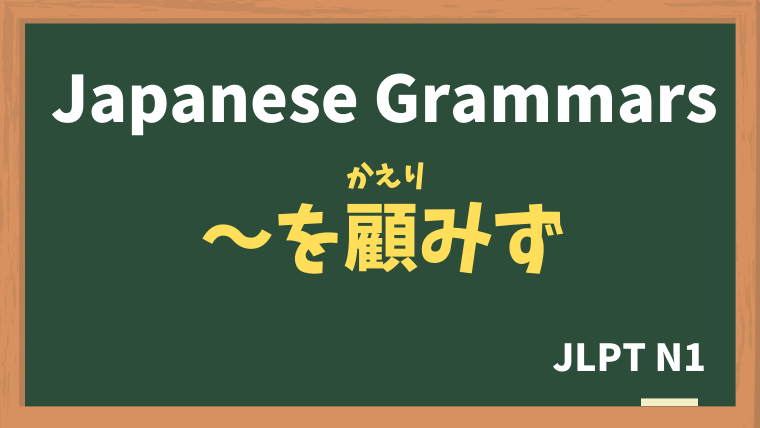
Explanation:〜を顧みず / 〜も顧みず
fa-check-circleMeaning
"〜を気にしないで / 〜をものともせず"
Used to indicate that someone is taking an action without considering or caring about the consequences, risks, or concerns associated with that action. It can be translated as "without regard for," "without considering," or "disregarding" in English. The phrase emphasizes a bold or reckless attitude, where the person proceeds despite potential dangers or warnings.
fa-check-circleForm
N + を顧みず / も顧みず
fa-check-circlePoints
- Disregard or Indifference: The expression is used when someone acts without concern for something important, like safety, rules, or others' feelings.
- Formal or Written Usage: It is more commonly found in formal contexts, written language, or serious speech.
- Often Refers to Negative Outcomes: The ignored factor is usually something that should be considered, such as danger, risk, or propriety.
fa-check-circleJLPT Level
N1
Sample sentenes
父は家庭を顧みず、毎日パチンコばかりしている。
My father neglects the family and spends every day playing pachinko.
彼は医者の忠告を顧みず、タバコを吸っている。
He disregards the doctor's advice and continues to smoke.
川で溺れている子を救うために、彼は危険を顧みずに飛び込んだ。
He jumped in to save a child drowning in the river, regardless of the danger.
彼は相手の気持ちも顧みず、思ったことは何でも言う。
He says whatever comes to his mind, without considering the other person's feelings.
彼は体調も顧みず、毎日夜遅くまで働いている。
He works late every night, without considering his health.
その男性は周りの目を顧みず、電車の中で電話で話していた。
The man spoke on the phone in the train, disregarding the eyes of those around him.
Vocabulary
| Japanese |
English | |
| 忠告 | ちゅうこく | advice / warning |
| 溺れる | おぼれる | to drown |