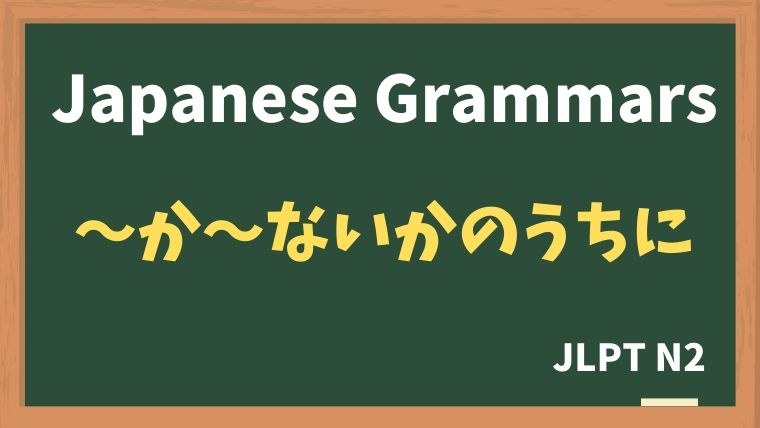
Explanation:〜か〜ないかのうちに
fa-check-circleMeaning
"〜するとすぐに / 〜したらすぐに"
"at almost the same time as doing / just when one was trying to do"
Used to indicate that two actions happen in quick succession, where the second action occurs almost simultaneously or immediately after the first one, sometimes before the first action is fully completed.
fa-check-circleForm
V(dictionary form/ ta form) + か + V(nai form) + かのうちに
fa-check-circlePoints
- Simultaneous or Immediate Action: This phrase emphasizes that the second action takes place so quickly after the first one that there’s hardly any time gap between them.
- Uncertainty: The nuance often suggests that the first action might not even be fully completed before the second action happens.
- Frequent in Descriptive Situations: It’s commonly used to describe situations where something occurs unexpectedly fast.
fa-check-circleJLPT Level
N2
Sample sentenes
電車が駅に着くか着かないかのうちに、たくさんの人が降りる準備をした。
As soon as the train approached the station, many people started preparing to get off.
映画が終わるか終わらないかのうちに、観客は席を立った。
As soon as the movie ended, the audience got up from their seats.
彼はベッドに横になるかならないかのうちに、眠ってしまった。
He fell asleep as soon as he lay down on the bed.
30分ジョギングするかしないかのうちに、足が痛くなってきた。
My feet started hurting after about 30 minutes of jogging.
Vocabulary
| Japanese |
English | |
| 観客 | かんきゃく | audience |
| 横になる | よこになる | to lie down |