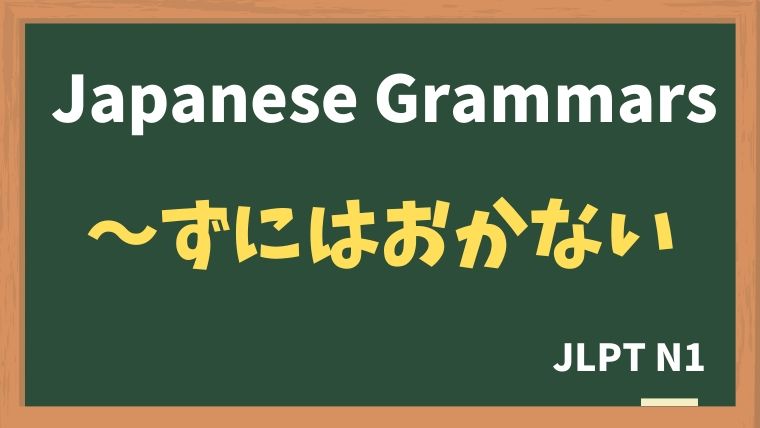
Explanation:〜ずにはおかない / 〜ないではおかない
fa-check-circleMeaning
①必ず〜する (強い決意を表す)
②自然に〜してしまう
This expression conveys a strong sense of certainty or inevitability, meaning that something will surely happen or cannot be avoided. It expresses that a certain action or situation will naturally lead to a result, often due to strong emotions or circumstances. It can be understood as "cannot help but" or "bound to."
fa-check-circleForm
V(nai form)ない + ずにはおかない ※「する」は「せずにはおかない」になります。
V(nai form)+ ではおかない
fa-check-circlePoints
- Strong Certainty or Emotion: This expression emphasizes the speaker’s strong belief or emotional intensity about something inevitably happening.
- Inevitable Result: It implies that an action or situation will unavoidably cause a certain outcome.
- Formal Expression: This is a more formal or literary expression, rarely used in casual conversation.
fa-check-circleJLPT Level
N1
Sample sentenes
この映画は見る人を感動させずにはおかない。
This movie will undoubtedly move anyone who watches it.
彼女の美しさは多くの男性を虜にさせずにはおかない。
Her beauty will inevitably captivate many men.
彼の態度は皆を怒らせずにはおかなかった。
His attitude inevitably angered everyone.
政府のあの対応は、国民を困惑させずにはおかなかった。
The government's response inevitably confused the public.
彼の行動は皆を不安にさせずにはおかなかった。
His actions inevitably caused everyone to feel uneasy.
Vocabulary
| Japanese |
English | |
| 虜にする | とりこにする | to capture one / to lend one captive |