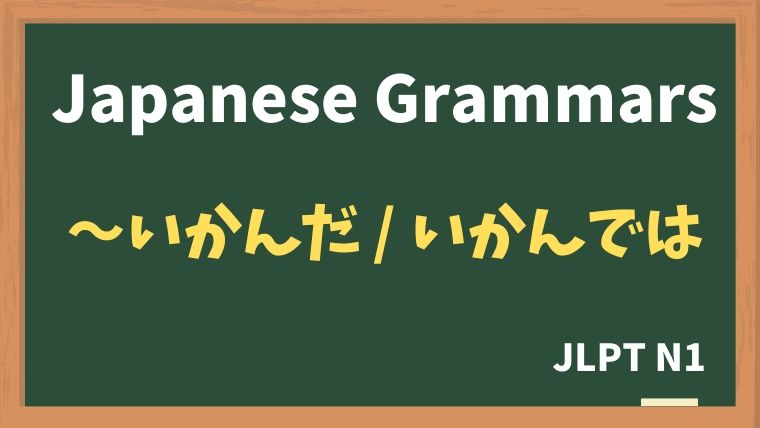
Explanation:〜いかんだ / 〜いかんでは / 〜いかんによっては
fa-check-circleMeaning
"〜によっては / 〜次第で / 〜かどうかで"
"depending on / based on / whether or not"
It has the same meaning as "〜次第だ," but this expression is more formal.
Used to indicate the importance of a certain condition or situation, often implying that the outcome or decision depends on that condition. They can express a sense of limitation, requirement, or criterion.
fa-check-circleForm
N(の) + いかんだ。
N(の) + いかんでは 〜
N(の) + いかんによっては 〜
fa-check-circlePoints
- Condition and Consequence: These expressions convey that the situation or action being discussed will change depending on certain factors or conditions.
- Formal Usage: They are often used in formal or written contexts, such as speeches, reports, or official communications.
fa-check-circleJLPT Level
N1
Sample sentenes
試験に合格できるかどうかは、君の努力いかんだよ。
Whether you can pass the exam depends on your efforts.
診断結果いかんでは、長期の入院が必要になるかもしれない。
Depending on the diagnosis results, long-term hospitalization might be necessary.
台風の状況いかんでは、旅行をキャンセルしなければならない。
Depending on the situation with the typhoon, we might have to cancel our trip.
就活の結果いかんでは、大学院への進学も考えている。
Depending on the results of my job search, I am also considering going to graduate school.
彼を採用するかどうかは、社長の判断いかんだ。
Whether to hire him or not depends on the president's decision.
Similar Sentence Pattern