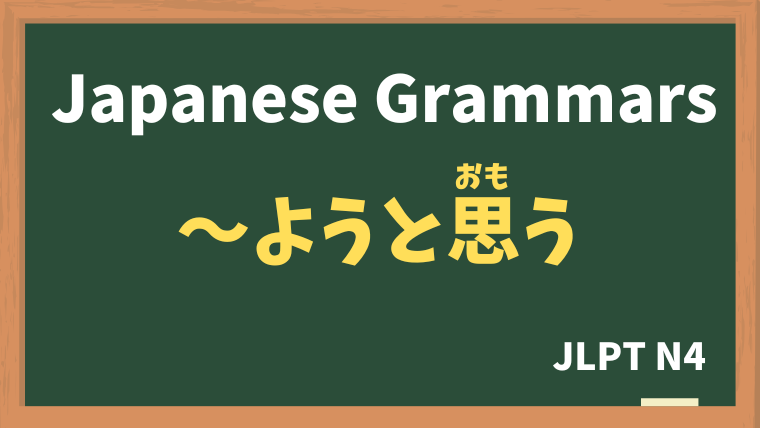
Explanation:〜ようと思う
fa-check-circleMeaning
Used to express the speaker’s intention or decision to do something. This structure implies that the speaker has a plan or determination to take a particular action, often in the near future.
fa-check-circleForm
Verb (volitional form) + と思う
fa-check-circleJLPT Level
N4
Sample sentenes
今日は 早く 寝ようと思います。
I'm going to bed early today.
明日は 早く 起きようと思います。
I'm going to wake up early tomorrow.
早く 仕事が 終わったので、ちょっと 飲みに 行こうと思います。
I finished work early, so I'm going out for a drink.
忘れ物を したので、一度 家に 帰ろうと思います。
I forgot something, so I'm going to go home once.
来年は JLPTを 受けようと思います。
I'm going to take the JLPT next year.
体調が 悪いので、今日は もう 帰ろうと思います。
I'm not feeling well, so I think I'll go home now.
風邪を 引いたので、今日は ゆっくり家で 休もうと思います。
I caught a cold, so I'm going to take it easy at home today.
これから、図書館で 勉強しようと思います。
I'm going to study at the library.
Vocabulary
| Japanese | English | |
| 忘れ物 | わすれもの | a thing left behind |