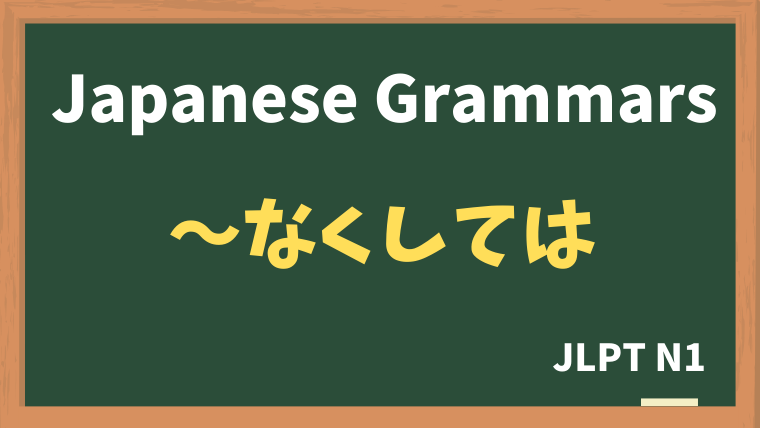
Explanation:〜なくしては
fa-check-circleMeaning
"〜がなければ・・・ない"
Used to convey that without something, a particular result or outcome cannot be achieved. It emphasizes the necessity of something for another event or action to occur. This phrase can be translated as "without," "if not for," or "without doing" in English. It often suggests that the action or situation described in the latter part of the sentence cannot happen unless the condition in the first part is fulfilled.
fa-check-circleForm
V(dictionary form)こと + なくして(は)
N + なくして(は)
fa-check-circlePoints
- Necessity: "〜なくしては" expresses that something is indispensable for a certain outcome.
- Hypothetical Condition: The phrase creates a hypothetical condition where the absence of the first element leads to the impossibility of the second.
- Common in Formal and Written Language: It is often used in formal contexts or written language but can appear in spoken language when emphasizing the importance of something.
fa-check-circleJLPT Level
N1
Sample sentenes
努力なくして、成功などない。
Without effort, there is no success.
親の援助なくしては、一人で生活なんてできない。
Without parental support, I cannot live alone.
彼なくしては、このプロジェクトは成功しなかっただろう。
Without him, this project would not have succeeded.
彼女なくしては、生きていけません。
I cannot live without her.
親の愛なくして、子は十分に育ちません。
Without parental love, a child cannot grow up properly.
Vocabulary
| Japanese |
English | |
| 援助 | えんじょ | support / help |