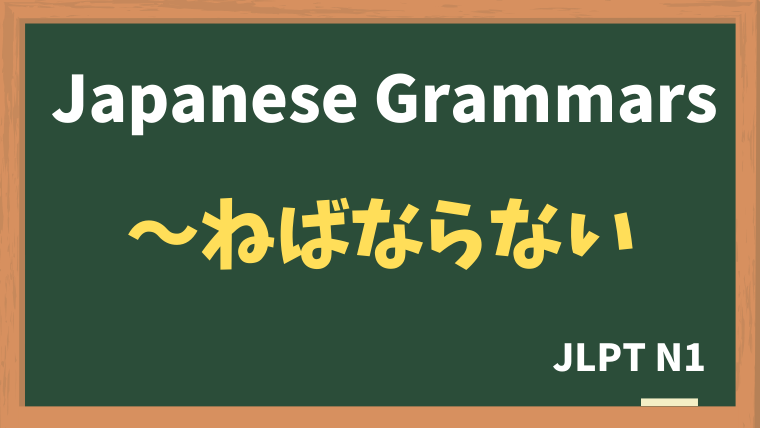
Explanation:〜ねばならない
fa-check-circleMeaning
"〜しなければならない"
A formal way to express obligation or necessity, equivalent to "must" or "have to" in English. It is a somewhat older and more literary form of expressing necessity compared to the more commonly used "〜なければならない." This expression emphasizes a sense of duty or unavoidable responsibility.
fa-check-circleForm
V(nai form)ない + ねばならない
※ある → あらねばならない / する → せねばならない
fa-check-circlePoints
- Obligation/Necessity: "〜ねばならない" expresses that something must be done or is necessary to do.
- Formal/Literary: It is often used in formal speech or writing and has a more serious tone compared to its casual alternatives.
fa-check-circleJLPT Level
N1
fa-check-circleNote
Used in written language
Sample sentenes
政府は国民の幸せのために常に努力せねばならない。
The government must always strive for the happiness of its citizens.
明日までにやらねばならないことが多すぎる。
There are too many things that must be done by tomorrow.
決勝に行くために、次の試合はなんとしても勝たねばならない。
To reach the finals, we absolutely must win the next match.
来月から転勤で海外へ行かなければならない。
Starting next month, I have to relocate overseas for work.
海を守るためにプラスチック製品を減らさなければならない。
To protect the oceans, we must reduce the use of plastic products.
Vocabulary
| Japanese |
English | |
| 国民 | こくみん | citizen / people |
| 決勝 | けっしょう | final |
| 転勤 | てんきん | transfer |
Similar Sentence Pattern