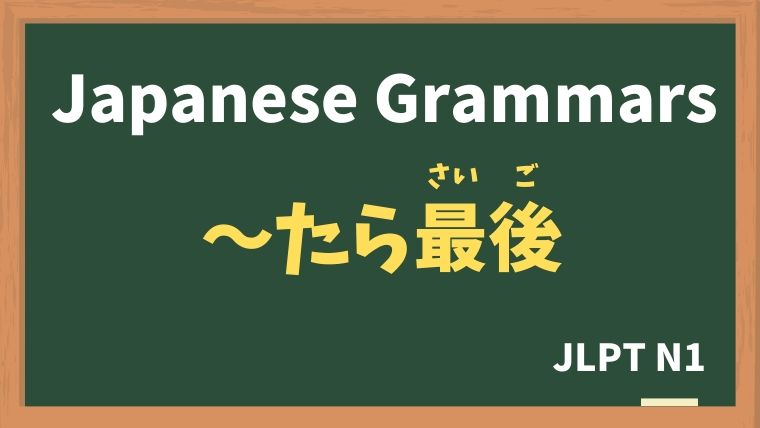
Explanation:〜たら最後 / 〜たが最後
fa-check-circleMeaning
"もし~をしたら、悪い結果になる"
"Once [something] happens, [something undesirable] will follow."
Used to indicate that once a certain condition is met, something undesirable or irreversible will inevitably happen. They emphasize the finality or seriousness of the consequence that follows.
fa-check-circleForm
V(ta form)+ たら最後
V(ta form)+ たが最後
fa-check-circlePoints
- Inevitability: This expression suggests that once the specified action or condition occurs, an outcome is unavoidable.
- Negative Consequence: It often implies a negative or undesirable result that follows from the action or state mentioned.
- Formal Usage: It is typically used in more formal or written contexts but can also appear in spoken language.
fa-check-circleJLPT Level
N1
fa-check-circleNote
話すときは「たら最後」をよく使います。
Sample sentenes
彼にお金を貸したら最後、二度と戻ってこないだろう。
Once you lend him money, it will never come back.
この森に入ったら最後、二度と戻ってこれないだろう。
Once you enter this forest, you might never return.
このアニメを見たら最後、続きが気になって夜も眠れないだろう。
Once you start watching this anime, you’ll be so hooked that you might not be able to sleep at night.
海外へ転勤したら最後、3年は戻ってこれないだろう。
Once you’re transferred overseas, you won’t be able to return for three years.
最後の試験でカンニングがバレたら最後、今までの努力が無駄になる。
If you’re caught cheating on the final exam, all your previous efforts will be wasted.
一度削除してしまったら最後、元に戻すことはできません。
Once you delete it, you won’t be able to restore it.
Vocabulary
| Japanese |
English | |
| 転勤 | てんきん | transfer |
| - | バレる | to be found out |