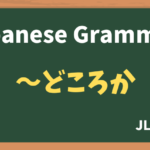
Explanation:〜どころか
fa-check-circleMeaning
"~というより、むしろ・・・だ。"
Used to indicate that not only is one thing not true, but the opposite or a more extreme situation is true instead. It is often translated as "far from" or "on the contrary" in English. This structure emphasizes the unexpectedness or contrast between two situations.
fa-check-circleForm
V(plain form)+ どころか
イA(plain form)+ どころか
ナA(plain form)+ どころか
N(plain form)+ どころか
fa-check-circlePoints
- Strong Contrast: "〜どころか" emphasizes that the actual situation is much different (or worse) than what was expected or assumed.
- Opposite Result: The second part of the sentence often describes a result that is contrary to the original expectation.
- Unexpected Situation: This expression is used to highlight an outcome that defies normal assumptions or is much more extreme.
fa-check-circleJLPT Level
N2
Sample sentenes
薬を飲んだのに、体調がよくなるとどころか、悪くなる一方だ。
Even though I took the medicine, my condition is not improving; it's only getting worse.
毎日5時間勉強しているのに、成績はよくなるどころか悪くなる一方だ。
Even though I study for five hours every day, my grades aren't improving; they're only getting worse.
毎日ジョギングしているのに、痩せるどころか2キロも体重が増えた。
Even though I jog every day, instead of losing weight, I gained two kilos.
アンナ:田中先輩って優しいですよね。
トム:えっ?優しいどころか毎日怒ってばっかりで怖いですよ。
Anna: Senpai Tanaka is kind, isn't he?
Tom: What? Kind? He's always angry and scary every day.
Vocabulary
| Japanese |
English | |
| 成績 | せいせき | grade |
| 痩せる | やせる | to be thin |
Similar Sentence Patterns