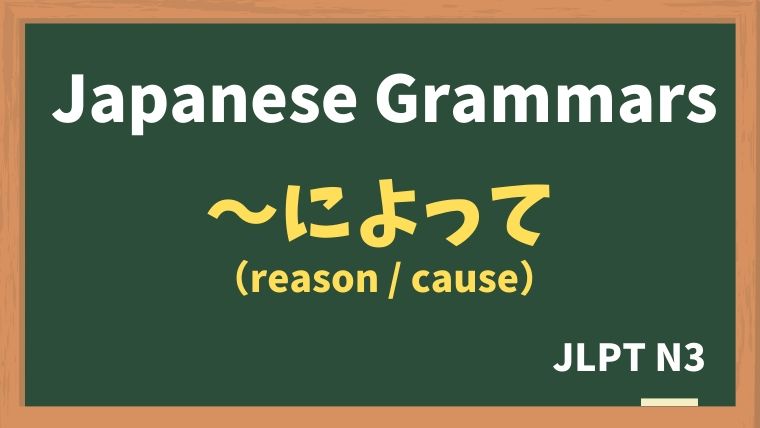
Explanation:〜によって / 〜によるN(reason / cause)
fa-check-circleMeaning
"〜のため:because of / owing to / due to "
Used to indicate a cause or reason for something, especially in more formal contexts. This usage typically explains how an event, action, or condition is caused by the preceding noun. It is commonly seen in news reports, formal writing, and explanations.
fa-check-circleForm
N + によって
N1 + による + N2
fa-check-circlePoints
- Indicates Cause or Reason: In this usage, "〜によって" expresses that something happens as a result of or due to a particular cause.
- Formal Context: This form is often used in more formal situations, such as news reports or official announcements.
fa-check-circleJLPT Level
N3
Sample sentenes
台風によって、たくさんの人が亡くなった。
Many people are dead because of the typhoon.
インフレによって、物価が上がっている。
The prices of goods are increasing because of the inflation.
人身事故による影響で、電車が遅れている。
The train line is delayed due to an accident resulting in either an injury or death.
火事によって、家がすべて焼けてしまった。
Everything in my house is burned because of the fire.
地球温暖化によって、様々な問題が起こっている。
Many kinds of problems come up due to global warming.
Vocabulary
| Japanese | English | |
| 亡くなる | なくなる | to die |
| インフレ | - | inflation |
| 人身事故 | じんしんじこ | accident resulting in injury or death |
| 影響 | えいきょう | influence |
| 火事 | かじ | fire |
| 全て | すべて | all / everything |
| 焼ける | やける | to burn |
| 地球温暖化 | ちきゅうおんだんか | global warming |
| 様々な | さまざまな | various |