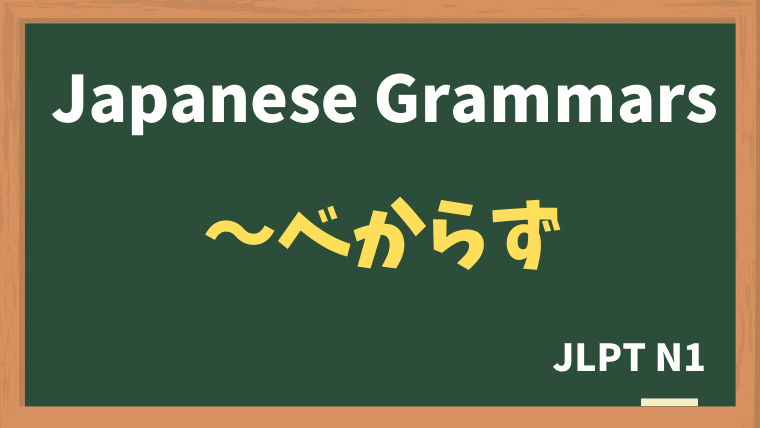
Explanation:〜べからず
fa-check-circleMeaning
"〜してはいけない"
"must not / should not be"
A formal and somewhat archaic way to indicate prohibition. It is often used on warning signs, instructions, or in authoritative contexts to strongly tell someone not to do something. It is the negative form of "べし," which means "should" or "ought to," thus "〜べからず" can be translated as "must not" or "should not."
fa-check-circleForm
V(dictionary form)+ べからず
※「する」は「するべからず」と「すべからず」の2つの言い方があります。
fa-check-circlePoints
- Formal Prohibition: "〜べからず" is used in formal or authoritative contexts to prohibit certain actions.
- Written Language: It is primarily found in written language, such as signs, official documents, and formal instructions.
- Old-fashioned: This expression has an old-fashioned, stiff tone, and is less common in everyday conversation, but still appears in certain formal settings.
fa-check-circleJLPT Level
N2
Sample sentenes
この先、入るべからず。
Do not enter beyond this point.
この橋、わたるべからず。
Do not cross this bridge.
ここにゴミを捨てるべからず。
Do not throw trash here.
初心忘るべからず。(proverb)
Don' forget your first resolution.
働かざる者、食うべからず。(proverb)
He who does not work, neither shall he eat.