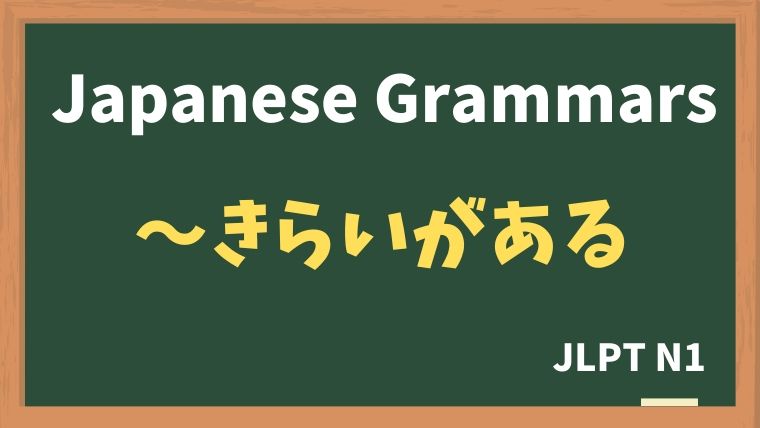
Explanation:〜きらいがある
fa-check-circleMeaning
"〜という良くない傾向がある"
良くない傾向(tendency)について言う時に使います。
"there is a certain tendency"
Used to indicate that someone tends to or has a certain negative tendency or habit. It is often used to point out a negative characteristic or behavior, though it softens the statement by implying that it’s just a tendency, not something definite or consistent. This expression usually conveys criticism or disapproval of the subject's behavior or actions.
fa-check-circleForm
V(dictionary form / nai form)+ きらいがある
N + のきらいがある
fa-check-circlePoints
- Tendency: It indicates a negative tendency, habit, or inclination that someone may have.
- Implied Criticism: It is often used to point out flaws or undesirable behaviors, but in a softer or more indirect way.
- Not Always Absolute: The expression implies that this is just a tendency, not something that always happens.
fa-check-circleJLPT Level
N1
fa-check-circleNote
① 自然現象(natural phenomenon)に使うことはできません。
② 話す時はほとんど使いません。書く時に使います。
① It cannot be used for natural phenomena.
② It's more written than spoken and is rarely used in conversation.
Sample sentenes
最近の若い人は本を読まないきらいがある。
Young people these days tend not to read books.
最近の子供たちは外で遊ばず、家の中でゲームばかりするきらいがある。
Children nowadays tend not to play outside and prefer to play games indoors.
スマホの普及により、最近の人は新聞を読まないきらいがある。
Due to the prevalence of smartphones, people nowadays tend not to read newspapers.
トムさんはいつも、難しく考えるきらいがある。
Tom always tends to overthink things.
社会人になると、運動不足になるきらいがある。
When people enter the workforce, they tend to lack exercise.
Vocabulary
| Japanese |
English | |
| 普及 | ふきゅう | spread |