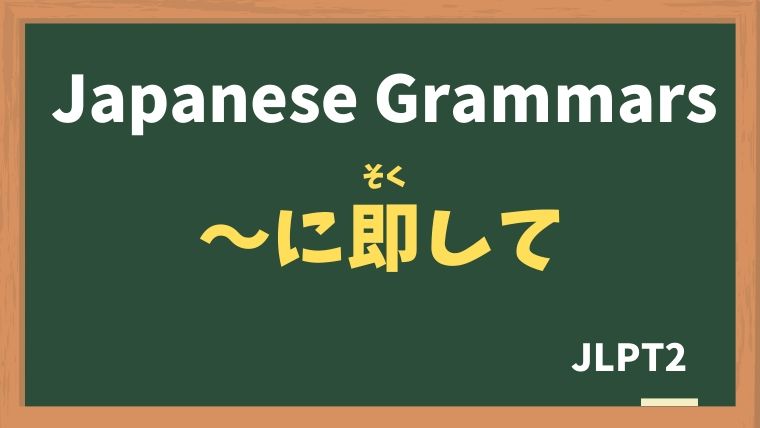
Explanation:〜に即して
fa-check-circleMeaning
"〜とおりに / 〜に従って / 〜を基準に ”
"along something / following something / based on something"
Used to describe actions or decisions made based on specific situations, standards, or rules. It conveys the idea of following or being in accordance with a certain guideline, context, or condition.
fa-check-circleForm
N + に即して
よく使われる単語
→事実、経験、状況、実態
fa-check-circlePoints
- In Accordance With: "〜に即して" is used when something is done in accordance with or following a particular standard, rule, or situation.
- Context-Specific: It often applies to decisions or actions made by considering the specific context or conditions.
- Formal Expression: This is a formal and somewhat literary expression, often found in business, legal, or academic settings.
fa-check-circleJLPT Level
N1
fa-check-circleNote
状況や経験などには「即して」が、法律・規則などには「則して」が使われます。
For situations or experiences, "即して" (based on) is used, while for laws and regulations, "則して" (in accordance with) is used.
Sample sentenes
マスメディアはきちんと事実に即して、報道すべきだ。
The media should report based on the facts accurately.
今年のボーナスは、今の経営状況に即して、低くなりそうだ。
This year's bonus is likely to be lower based on the current management situation.
この映画は、現実に即して作られている。
This film is made in accordance with reality.
この会社の働き方は、今の時代に即していない。
The working style of this company is not in line with the current era.
Vocabulary
| Japanese |
English | |
| 報道する | ほうどうする | to report |